You have seconds to earn a click and minutes to win a showing. In McLean’s luxury tier, buyers scroll past anything that does not feel turnkey and lifestyle driven. If your home is headed to market, a design-led staging plan helps you command attention, shorten days on market, and defend your price. Below, you’ll find a McLean-specific playbook with principles, room-by-room tactics, media preparation, timeline, and budget guidance. Let’s dive in.
Why design-led staging is your McLean advantage
McLean sits at the top of Northern Virginia’s market with multi-million-dollar medians and a relatively tight set of active listings, which puts presentation in the spotlight for every new launch. You can see this high-level context in Realtor.com’s McLean market snapshot. Regional reporting also shows Northern Virginia moving toward a more balanced market while the luxury tier stays resilient. That balance means buyers have more choices and will be selective about what feels truly move-in ready and well presented, especially at higher price points. (Tysons Today market summary)
Staging is not window dressing. The National Association of Realtors reports that staging often reduces time on market, and many agents see staged homes attract higher offers when compared with similar unstaged properties. Conservative figures commonly cited fall in the 1 to 5 percent range for offer impact, which can be meaningful in the McLean luxury band. (NAR Profile of Home Staging)
Core principles: design-first staging
Tell one lifestyle story
Luxury buyers shop by lifestyle as much as layout. Decide on a clear narrative that fits your property and likely buyer, such as modern entertaining, an elegant family retreat, or an executive escape. Filter every selection through that lens, from sofas and art to tableware and outdoor vignettes.
Honor scale and proportion
Large McLean rooms can read cold if furniture is pushed to the walls or sized too small. Float groupings to create conversation zones and anchor them with rugs that are sized to carry the furniture. If a rug is undersized, layer a larger neutral base underneath so the space feels intentional. For practical rug sizing tips, this concise guide helps you right-size anchors and avoid the “lost furniture” look. (Area rug sizing basics)
Light in layers
Layer ambient, task, and accent lighting so photographs feel dimensional and warm, then fine-tune with dimmers at twilight. Hardware, sconces, and art lighting read as quality cues in stills and video. Replace bulbs for color consistency and make sure lampshades are clean and aligned.
Edit to the buyer
Remove family photos and personal collections so rooms feel fresh but not empty. Keep high-end finishes visible and add a few elevated accessories, such as sculptural lighting, a neutral throw, or a simple vase with greenery. Use live plants or high-quality faux greens sparingly to add life without clutter.
Room by room: what to stage first
NAR data shows the living room, primary bedroom, and kitchen carry the most impact for buyers, so prioritize these before layering in secondary spaces. (NAR Profile of Home Staging)
Great room: make it the hero
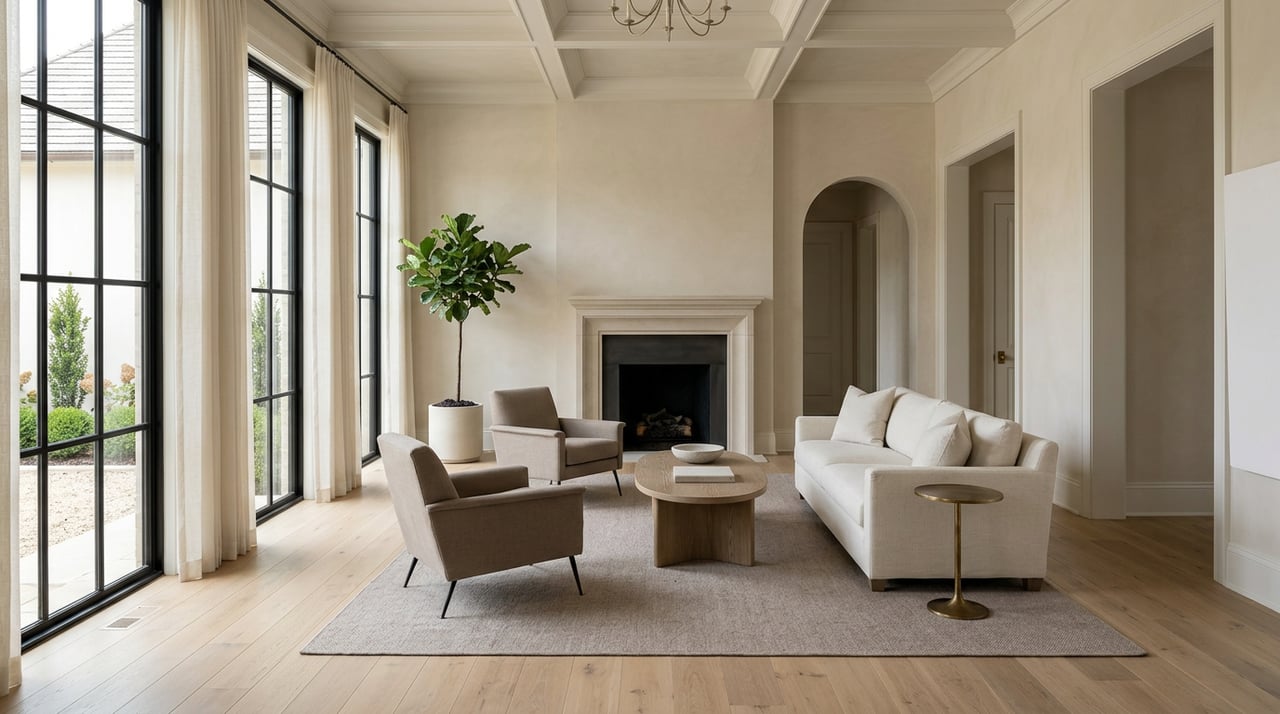
Center a large seating arrangement on a generous rug with two sofas or a sectional plus chairs. Balance with a scaled coffee table and lamps that frame the conversation area. Choose one statement art piece sized to the wall and keep sight lines open to patios, pools, or views. Maintain clear traffic paths for showings.
Kitchen: quiet, functional luxury
Clear the counters and let professional appliances and prep zones show through. Style a few matching vessels, a folded set of bar towels, and a single bowl of fruit. If entertaining is a listing theme, set two place settings at the island to hint at flow without clutter.
Dining room: simple and elegant
Dress the table with a runner or minimalist centerpiece that fits the table scale. Set the chandelier on a dimmer and add soft accent lighting on a sideboard. Keep personal collections and overly thematic decor out of frame.
Primary suite and spa baths
Aim for a hotel-level feel with crisp neutral bedding and a tightly made bed. Place matching lamps on dimmers, edit nightstands, and present closets with consistent hangers and breathing room. In baths, stage white towels, a small tray, and a single plant or candle to sell the spa narrative.
Specialty rooms and amenities
In McLean, offices, theaters, gyms, wine rooms, and outdoor kitchens are often decision points. Stage an office to show a real workspace, set theater seating with cozy throws and controlled lighting, and keep a gym minimal with mats and a few polished pieces. Outside, clean the pool, arrange lounge seating, and test exterior lighting for evening photos. These amenity spaces should read as turnkey, not theoretical. (Luxury media and amenity cues)
Closets and garage
Stage at least the primary closet with a tidy, neutral wardrobe and shoe alignment. Clean and declutter the garage so storage and parking are obvious. High-end buyers expect generous, well-presented storage as part of the value story.
Media prep that sells the story
Your photos and video are the first showing. Treat the media day as a production.
Timeline to stay on track
- 6 to 8 weeks before listing: finish structural repairs, system checks, and major landscape work if needed.
- 2 to 4 weeks before photos: hire a stager and photographer, schedule furniture delivery and installation, and allow multi-day windows for estates. (Staging scope planning tool)
- 48 to 72 hours before media: complete deep cleaning, exterior touch-ups, and lighting tests; confirm a twilight slot.
- Day-of shoot: replace bulbs, open window treatments, set neutral scents, and place a few lifestyle props.
Day-of photo and video checklist
- Turn on all lights, inside and out, especially for twilight.
- Remove personal items, pet gear, toiletries, and medications.
- Make beds to hotel standards and style baths with coordinated towels.
- If safe, turn on fireplaces for still shots. Avoid heavy scents or busy seasonal decor.
- Create small lifestyle vignettes: a single place setting, a stack of books, or a single vase of flowers.
Must-have shot list for McLean luxury
- Hero twilight exterior for the cover image. (Why twilight works)
- Entry sequence that reveals flow from foyer to great room.
- Great room from two angles; kitchen with island, appliances, and pantry; primary suite and bath; key secondary rooms.
- Specialty spaces: theater, wine, gym, office; major outdoor living areas; garage, gates, and drive.
- A short amenity reel that highlights smart-home panels, elevators, or spa features.
- Consider a 3D or virtual tour to support out-of-area buyers and increase engagement.
Aerials and the DC airspace
Washington-area airspace is unique. Many McLean properties fall in or near the DC Special Flight Rules Area and the Flight Restricted Zone. Always confirm property coordinates against FAA tools and use a Part 107 licensed pilot who can secure LAANC or formal authorization when required. Do not rely on consumer app unlocks without proper clearance. (FAA SFRA/FRZ overview)
If authorization is not possible, substitute elevated ground-based exteriors or work with a vendor experienced in approved FRZ operations that coordinate with FAA and security channels. (Operating options near the FRZ)
Virtual staging and retouching
Virtual staging can be a fast, cost-effective way to present vacant rooms online. It works best for high-impact spaces like the living room, primary suite, and kitchen. Use it to accelerate your launch, then back it up with physical staging for private tours. Industry summaries show very low per-image costs with solid ROI potential when used thoughtfully. (Virtual staging ROI data)
Budget and ROI: what to expect
Every home is different, but a few national ranges help you plan. Full-service staging varies widely based on square footage, the number of rooms staged, and rental duration. National surveys place average full-service costs in the low thousands, with luxury or estate properties running higher due to scale and furniture quality. (Staging cost overview)
- Occupied home staging that focuses on editing, accessories, and light rental tends to be much lower than furnishing a vacant estate.
- For high-end homes, many advisors model staging as roughly 0.5 to 1 percent of the asking price as a planning heuristic, then refine with local bids. (Planning calculator reference)
- Photography, video, twilight, drone, and 3D capture are typically add-ons and scale with scope; premium cinematic packages cost more but are impactful for luxury.
To think about ROI, use conservative benchmarks. NAR’s research shows staging often reduces time on market and can lift offers in the 1 to 5 percent range in many cases. Compare expected price support and speed against carrying costs like mortgage, taxes, insurance, and maintenance. If staging helps you avoid a price reduction or trims weeks off market time, the net can be significant, especially in McLean’s price tiers. (NAR Profile of Home Staging)
Logistics that protect your sale
- Confirm HOA or community rules on exterior staging, signage, and common-area use before install.
- Ask your stager and media vendors for certificates of insurance covering general liability and rented inventory.
- Plan for a 1 to 3 day staging install window for estates and avoid scheduling photography until the install is complete.
Quick staging checklist for McLean sellers
- Entry: edit, style the console with one vase, confirm all lighting works.
- Great room: anchor with a large rug, float seating, size art to the wall.
- Kitchen: clear counters, style the island minimally, highlight appliances.
- Dining: set a simple table, add dimmable chandelier lighting.
- Primary suite: hotel-style bed, matching lamps, edited closets.
- Outdoor: arrange seating, clean pool, test exterior lights for twilight.
- Specialty: present an organized wine room, a real working office, a tidy gym, and a comfortable theater.
When you pair a design-first staging plan with a strategic launch, you give McLean buyers a clear reason to act. Thoughtful presentation supports your pricing story, makes your online cover photo irresistible, and keeps private showings focused on the home’s strengths. If you want hands-on coordination, trusted vendor referrals, and gallery-level marketing backed by global reach, connect with Jenna Gallant to Schedule a Consultation.
FAQs
Will staging pay for itself on a McLean luxury listing?
- It can. NAR research shows staging often reduces time on market and many agents see offer improvements in the 1 to 5 percent range compared with similar unstaged homes. Exact outcomes depend on comps, pricing, and carrying costs.
How far in advance should I start staging for a McLean sale?
- Begin 6 to 8 weeks before listing if repairs or landscaping are needed, then hire your stager and photographer 2 to 4 weeks before photos to allow for planning and installation.
Is virtual staging acceptable for high-end McLean homes?
- Yes as a supplement. Virtual staging is cost-effective for online launch, especially for vacant rooms, but physical staging still drives the best in-person experience during private showings.
Can I use drone photos if my McLean property is near D.C.?
- Possibly. Much of the area sits inside restricted airspace. Always use a Part 107 pilot and secure proper FAA authorization. If denied, opt for elevated ground-based alternatives or work with a vendor experienced in approved FRZ operations.
What are typical staging costs for luxury properties?
- Costs vary by size and scope. National surveys show averages in the low thousands for full-service staging, with luxury estates higher due to scale and furniture quality. Many sellers model 0.5 to 1 percent of list price as a planning guide and then confirm with local bids.